Learning Through
Nature
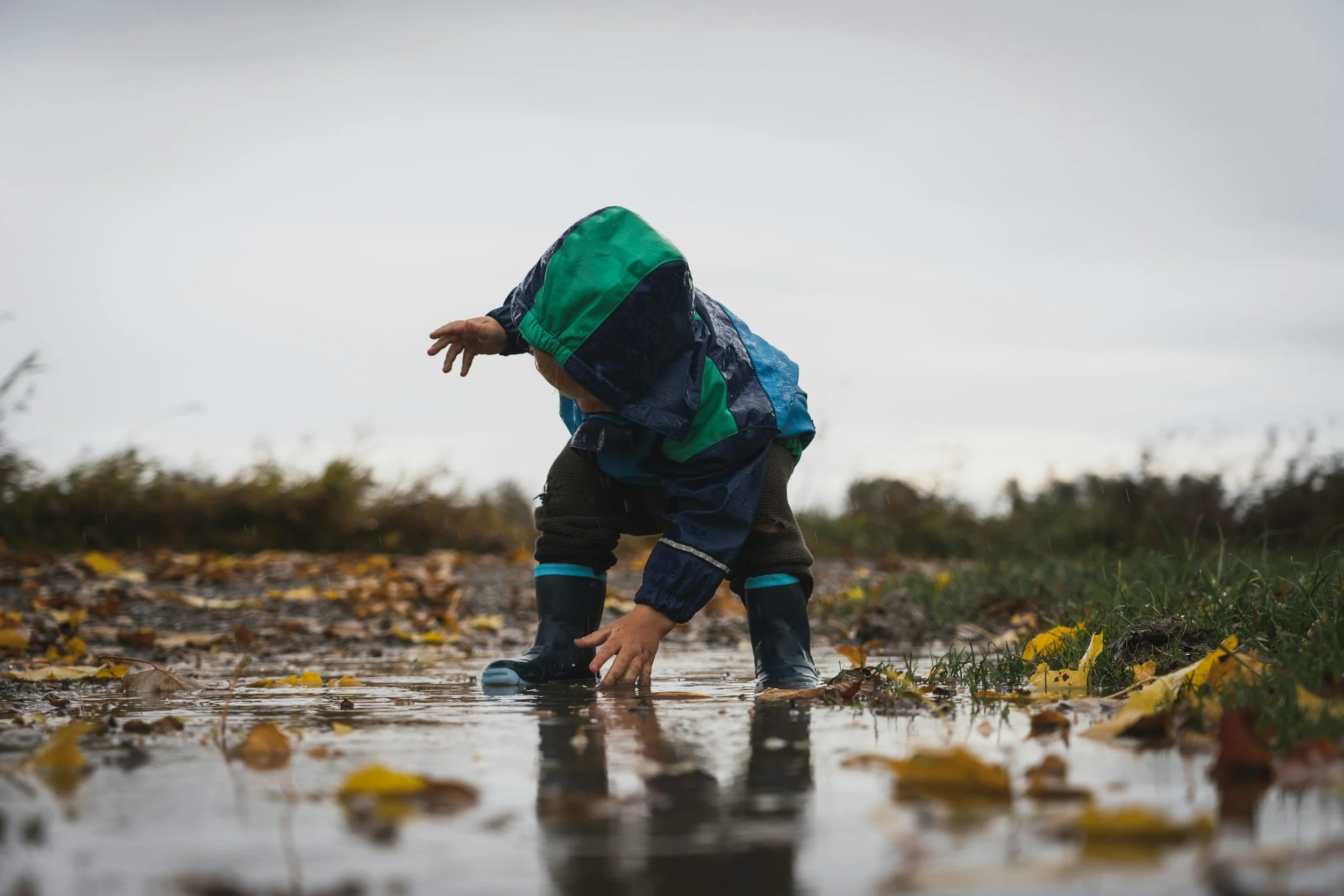
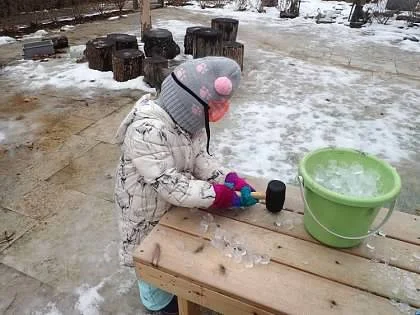
Wilderkin Forest Learning believes that children learn best through direct, meaningful experiences in nature.
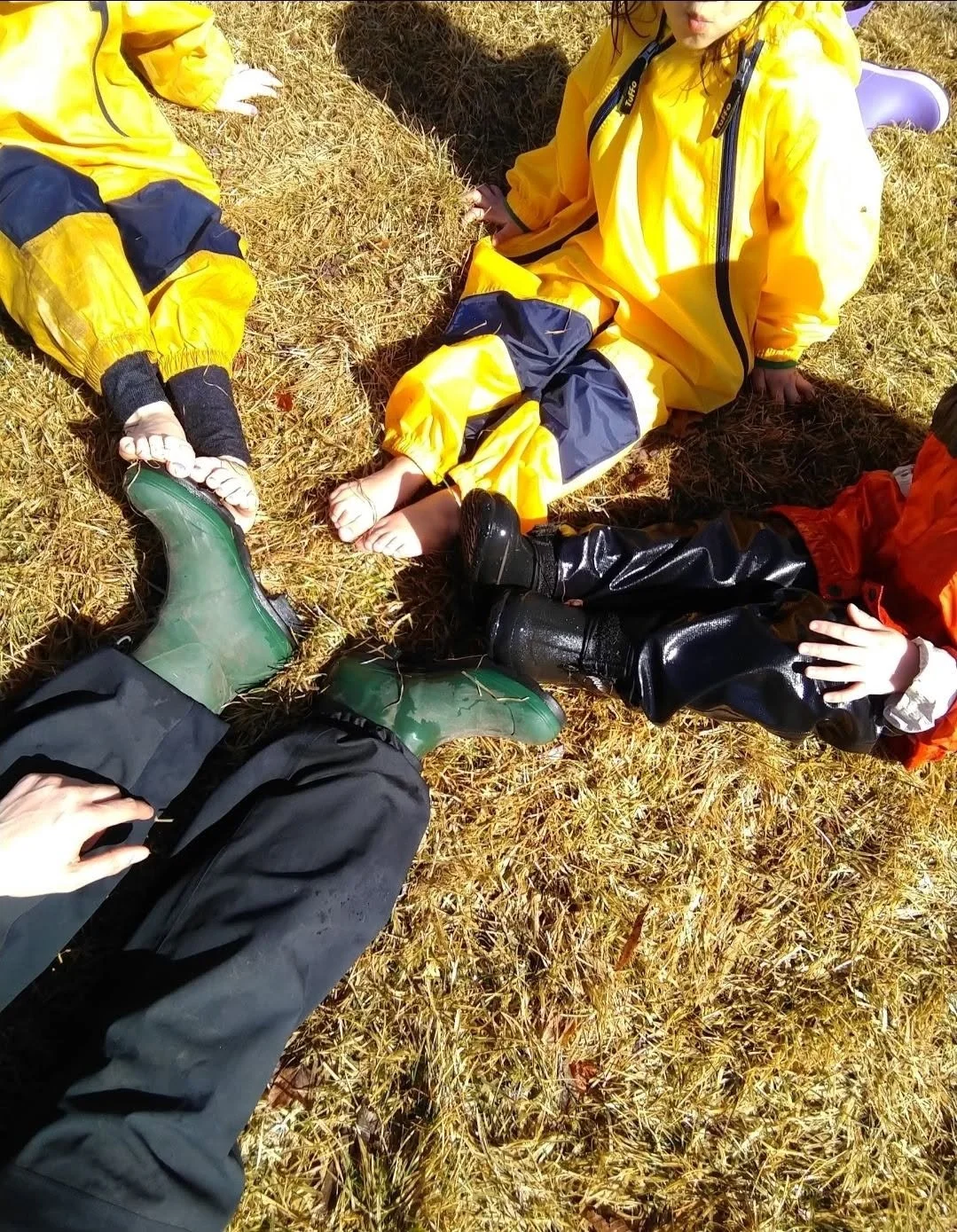
By spending extended time outdoors throughout the seasons, children develop a deep relationship with the natural world – noticing patterns, cycles, and transformations that foster a sense of wonder, respect, and belonging.
Seasonal rhythms guide our days and curriculum, allowing learning to emerge naturally from what children observe, feel, and experience in their environment.
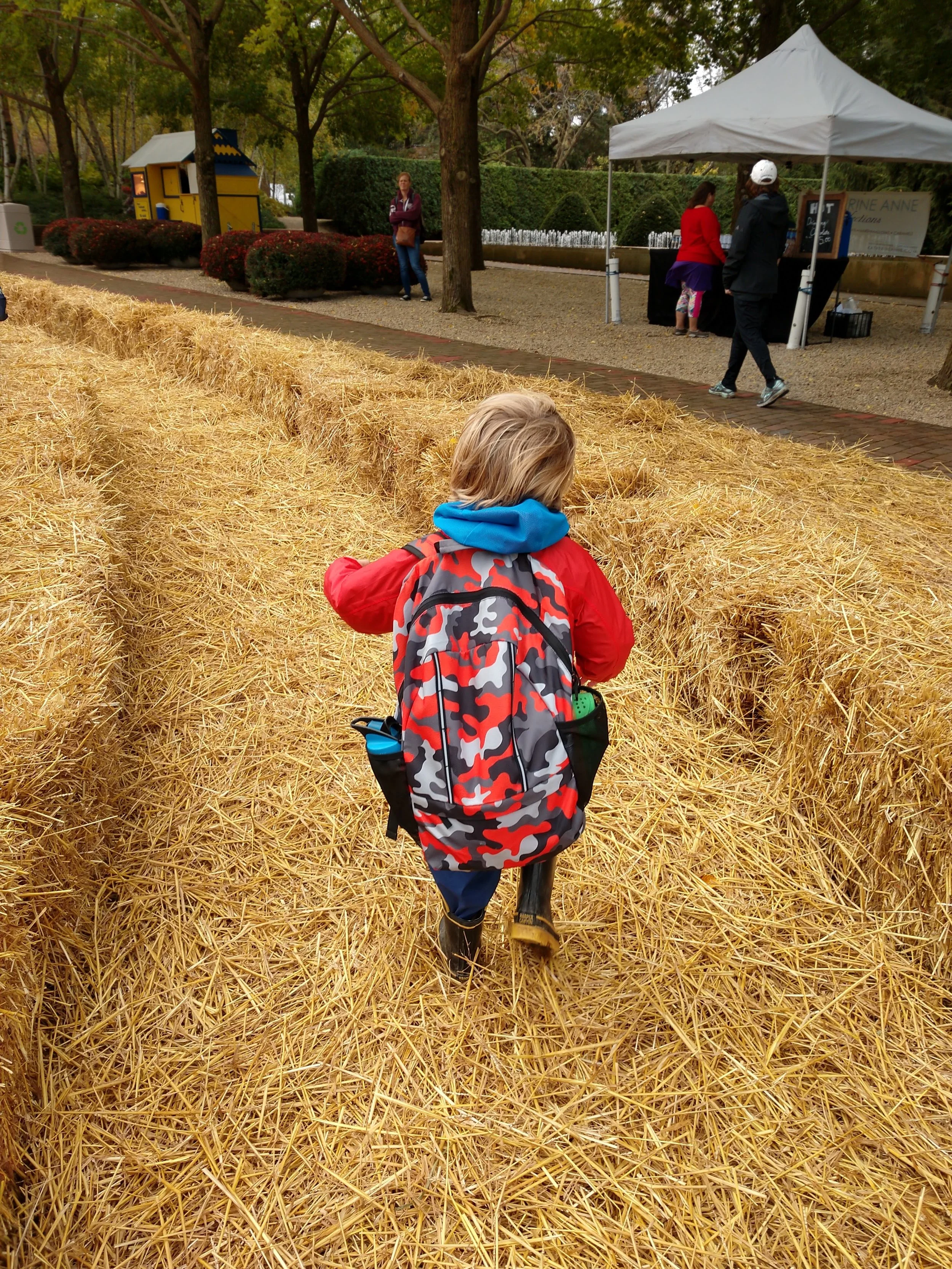
We support the development of the whole child by nurturing physical, social, emotional, cognitive, and practical life skills.
Through child-led exploration, hands-on problem solving, and purposeful play, children build confidence, independence, resilience, and cooperation.
The Role of Educators
Educators act as facilitators, encouraging curiosity, thoughtful risk-taking, and reflection while honoring each child’s unique pace and interests.
Our program values:
Curiosity as the foundation of learning
Independence as a life skill
Natural wonder as a lifelong source of joy and stewardship
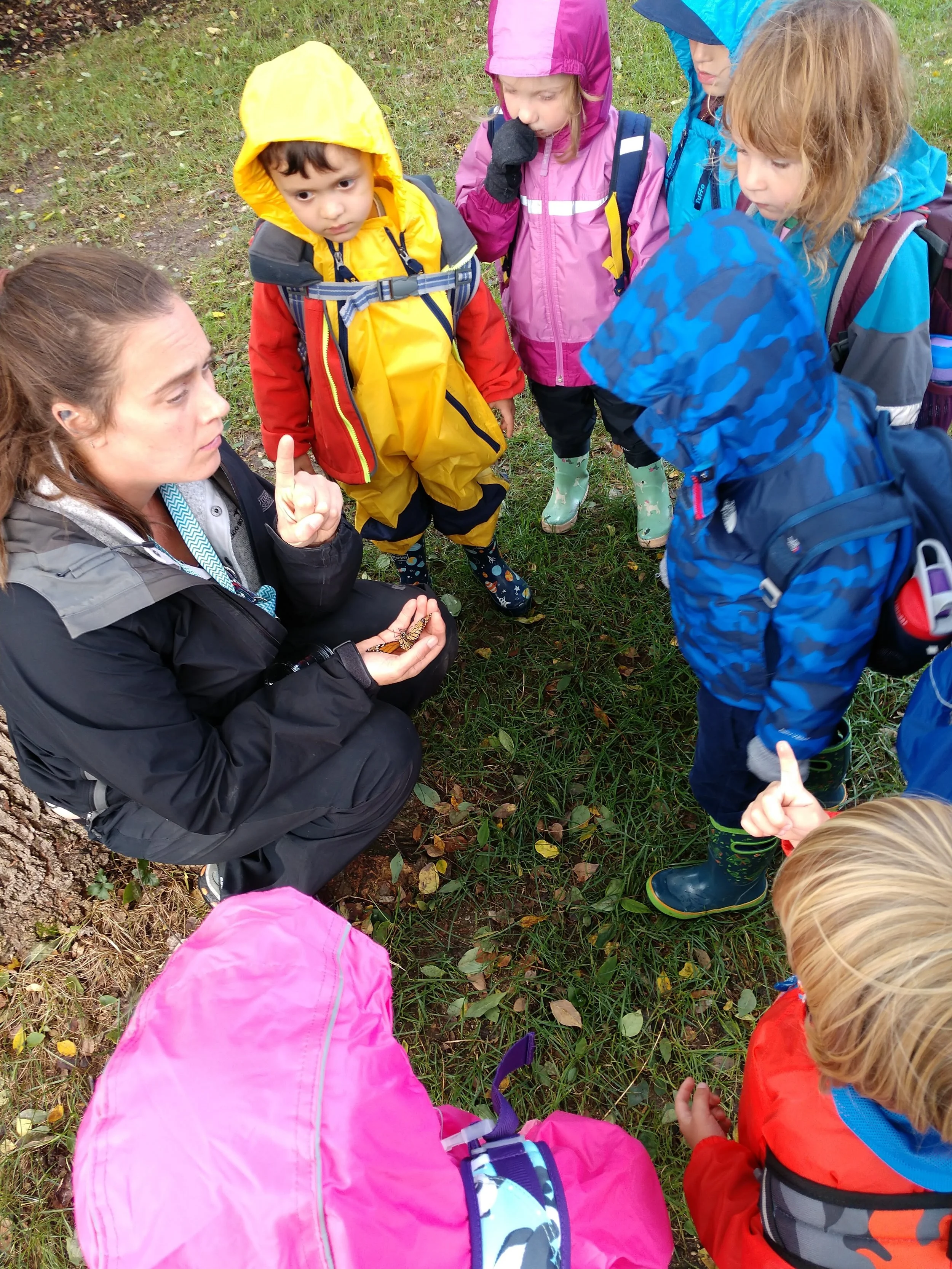
Children learn best when they are actively involved in their own learning, while in an environment suited to their age & developmental needs – with the grown ups who know them best.
Wilderkin Forest Learning believes that the learning environment must include:
The FOrest Learning Curriculum
Our programming supports an ideal learning environment by focusing on the following areas of learning:
-
Reading & Early Literacy
Early literacy is nurtured through storytelling, conversation, songs, and shared reading experiences. Children develop listening skills, vocabulary, and comprehension by hearing rich language during play, while hiking and through discussions with guides and peers. We read aloud daily and encourage children to retell experiences while guides record and document.
Print awareness grows as children see their names, supply labels, trail signs, and simple words in meaningful contexts, such as on the trails, when looking at weather charts, and when using field guides.
-
Reading & fine motor development
Writing begins with strengthening fine motor skills and expressing ideas through drawing, mark-making, and hands-on work like cutting, crumpling, and squeezing. Children use natural materials and tools to build hand strength, coordination, and control.
We encourage children to draw pictures, create symbols, and attempt letter formation at their own pace, emphasizing communication and creativity rather than correctness.
-
Science & Nature Studies
Science learning happens through direct observation, inquiry, and exploration of the natural world. Children ask questions, make predictions, and test ideas as they interact with plants, animals, weather, and seasonal changes. We guide children to notice patterns, compare observations, and care for living things, building early scientific thinking and instilling a sense of environmental stewardship.
-
Math & Logical Thinking
Math concepts are woven into everyday play and real-life experiences. Children develop number sense, spatial awareness, and problem-solving skills through counting, sorting, measuring, and building. We introduce math language naturally and encourage children to think with numbers as they play and explore.
-
Social Studies & Community Awareness
Social Studies helps children understand themselves, others, and the world around them. We offer this through generational storytelling and sharing, exploring while discussing social and private spaces in the park, using maps and community members to tell us more about where we are and what is around. Children learn about community, cooperation, responsibility, and respect for diverse people and cultures – and at Wilderkin, they can begin to understand their role within a group through sharing natural spaces, meals, and stories.
-
Social & Emotional Skills
Children learn to communicate, cooperate, and build relationships through group play, shared responsibilities, supported risk-taking, and guided problem-solving. Educators model empathy, support emotional expression, and help children practice self-regulation, independence, and respect for others.
Want to learn more?
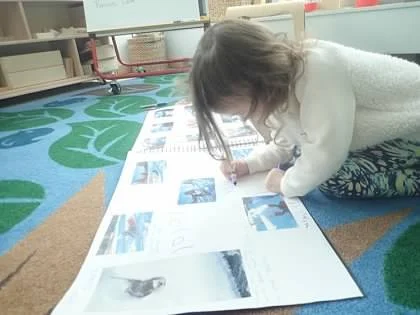
Our curriculum is largely demonstrated through the The Floorbook Approach, a methodology for child-led planning and documentation that puts children's voices first. We’re happy to answer any additional questions about our programming–just send us a message!